BRENDEN CAVAZOS
Product · Active Promotions Report
How the QA Automation Was Designed
An enterprise promotion-readiness product built through a design- thinking process -- user research, root-cause discovery, consolidated data modeling, and intuitive interface design -- that replaced a manual, error-prone QA process with a fast, self-service workflow.
2,800+
users adopted the product
99.4%
manual effort reduced
$1.6M
annual savings
400+
associates trained
Design Process, at a Glance
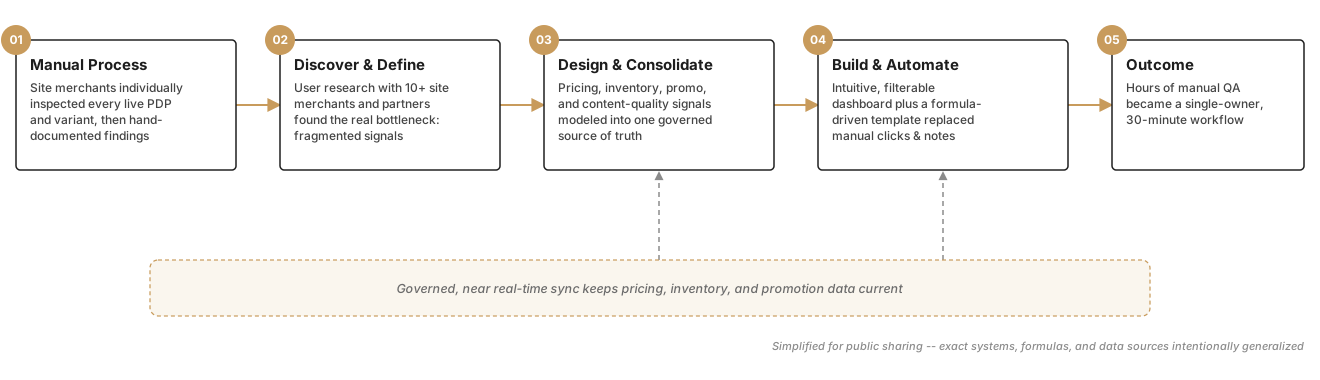
A simplified view of the design-thinking-to-automation process behind the Active Promotions Report. Exact systems, formulas, and data sources are intentionally generalized for this public one-pager.
How It Was Designed, Behind the Scenes
The starting point was not a dashboard -- it was user research. Working directly with 10+ site merchants and cross-functional partners surfaced the real bottleneck: the problem wasn't a lack of data, it was that pricing, inventory, promotional status, and content-quality signals lived in disconnected systems and had to be checked one product page at a time. The fix modeled those signals into a single, governed, near real-time source of truth in BigQuery, using a chain of conditional checks to classify each item -- flagging it as promotional, low-inventory, content-incomplete, or another readiness state -- so the right owner could act without manually cross-referencing systems. That source of truth was wrapped in an intuitive, filterable interface built for how site merchants actually work -- plus a formula-driven template that auto-generated QA comments instead of requiring them to be typed by hand.
Technology Behind the Tool
- SQL (conditional, decision-tree-based item classification)
- BigQuery-based enterprise data warehouse integration
- Automated, near real-time data consolidation
- Rule-based readiness flags (promotional, low-inventory, content-incomplete, and other states)
- Formula-driven auto-commenting automation
- Filterable BI dashboard design
Capabilities Demonstrated
- Customer discovery
- User research (10+ participants)
- SQL-based data modeling
- Workflow design
- Product development
- Automation & enablement
- Cross-functional leadership
- Change management